
When the office closes, freight keeps moving. Drivers need support, brokers expect updates, and problems still happen overnight.

That is why many fleet owners start searching for after-hours coverage. The familiar answer is usually a call center. It sounds simple. Someone answers the phone. Someone takes a message. Someone escalates the issue.
But in trucking, the issue is rarely just the call.
The real question is not whether someone can answer at 2 AM. The real question is whether that person can actually do something with the information.
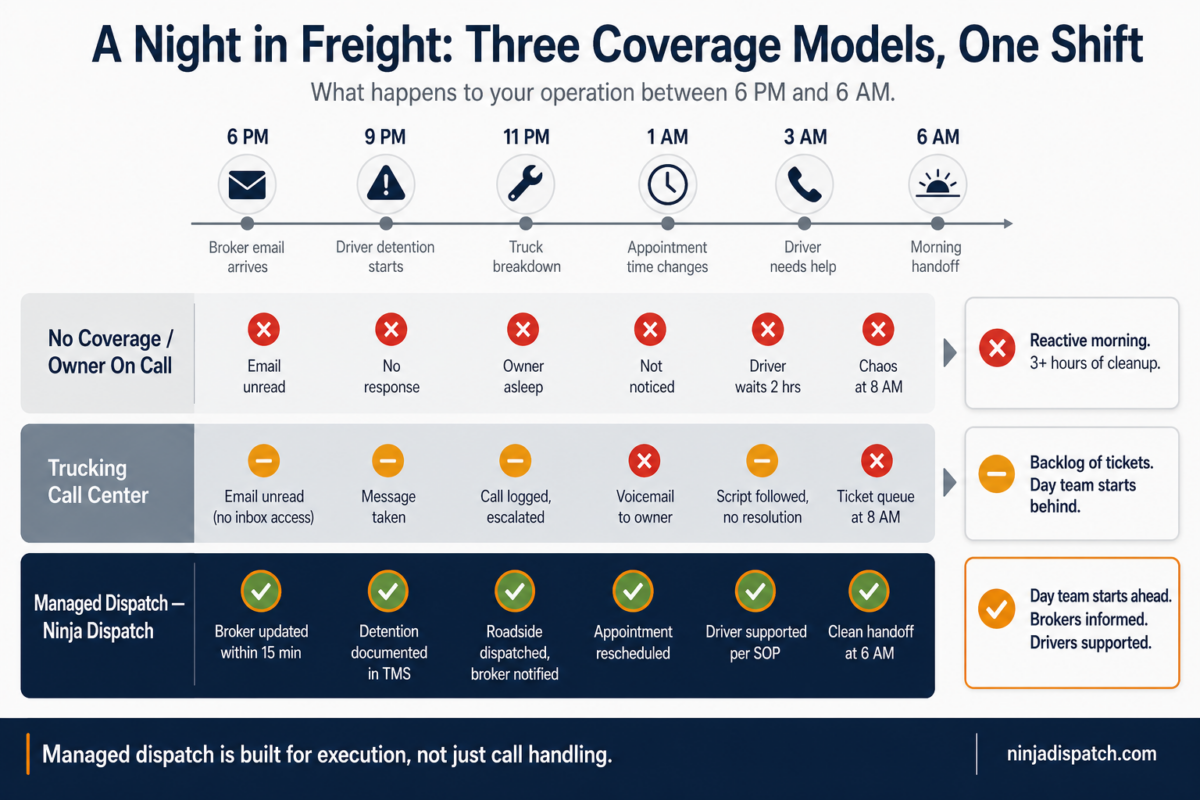
That is where the difference between managed night dispatch vs call center coverage matters. A trucking call center handles communication. Managed dispatch handles overnight operations.
Why Trucking Companies Confuse Dispatch With Call Handling
A call center is built for volume. It answers calls, follows scripts, creates tickets, and routes information to the right place. That model works in industries where the main job is intake.
Trucking is different.
A driver calling overnight may not need a message taken. They may need detention documented, a broker updated, a delivery appointment confirmed, a late pickup escalated, or a breakdown communicated before the load falls apart.
That requires context. It requires access. It requires someone who understands the workflow, not just the phone script. These are the same operational gaps fleets eventually notice when they look at the 5 signs your trucking company needs managed night dispatch — missed broker updates, stranded drivers, and overnight problems landing in the morning inbox.
That is why managed night dispatch vs call center coverage is not just a staffing comparison. It is an operational ownership comparison.
What a Trucking Call Center Usually Does
A trucking call center handles communication: calls, messages, scripts, tickets, and escalations. That can help with basic coverage, but it usually does not replace dispatch when trucks are actively moving overnight.
What Managed Dispatch Actually Means
Managed dispatch is different because it is built around execution. For fleets comparing dispatch outsourcing options, the key difference is whether the provider only takes messages or actually manages the overnight workflow.
A managed dispatch team works inside the operation. It follows the fleet’s SOPs, uses the fleet’s systems, communicates with drivers and brokers, manages exceptions, and hands the shift back with clear documentation.
A true after-hours dispatch service should include:
- TMS access
- Custom SOPs
- Dedicated team structure
- Driver and broker communication
- Exception management
- Dashboard visibility
- Shift handoffs
- Accountability for outcomes
Managed Dispatch vs. Call Center vs. In-House Coverage
| Category | Managed Dispatch | Trucking Call Center | In-House Night Team |
| TMS Access | Integrated into the fleet’s workflow | Often limited or no access | Full access |
| Dedicated Team | Assigned team structure | Usually pooled agents | Internal employees |
| SOPs | Custom SOPs by fleet | Script-based processes | Internal SOPs |
| Dashboard Visibility | Often included | Usually limited | Depends on tools |
| Operational Ownership | Handles workflows and exceptions | Takes messages and escalates | Full ownership |
| Broker Updates | Sends and manages updates | May only log requests | Yes |
| Driver Support | Active overnight support | Basic call answering | Yes |
| Cost Structure | Managed service model | Lower-cost call handling | Salaries, benefits, training |
| Onboarding | SOPs, systems, workflow setup | Faster, but shallower | Longer hiring and training |
| Accountability | Provider accountable to expectations | Limited to call handling | Internal management |
Why TMS Access Changes the Entire Model
Without TMS access, an overnight team can only relay messages. With TMS access, they can see load details, appointment times, driver status, notes, and next steps. That allows faster decisions, cleaner updates, and stronger morning handoffs.
The Real Cost Difference Is Not Just the Hourly Rate
A call center may look cheaper on paper. In-house coverage may look more controlled. Managed dispatch may look like the middle option.
But the better question is not, “Who answers calls for less?”
The better question is, “Who prevents overnight issues from becoming morning problems?”
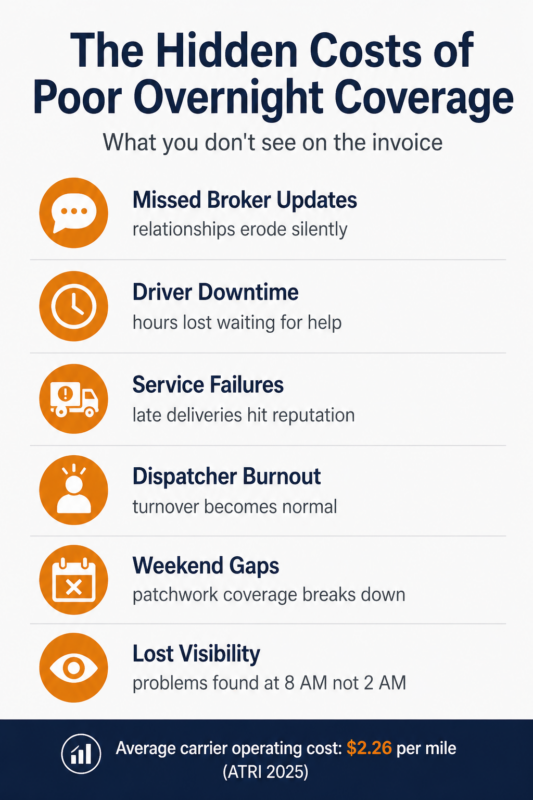
The cost of poor dispatch coverage shows up in places that are harder to see at first:
- Missed broker updates
- Driver downtime
- Service failures
- Dispatcher burnout
- Weekend gaps
- Poor handoffs
- Lost visibility
Those problems matter more in a market where operating costs are already tight. ATRI’s 2025 Operational Costs of Trucking report found that the average motor carrier operating cost was $2.26 per mile in 2024, showing how little room carriers have for avoidable waste.
When margins are tight, overnight mistakes do not stay small.
When a Call Center Is Enough
A call center may be enough if a company only needs basic message-taking, low-volume inbound coverage, or simple escalation.
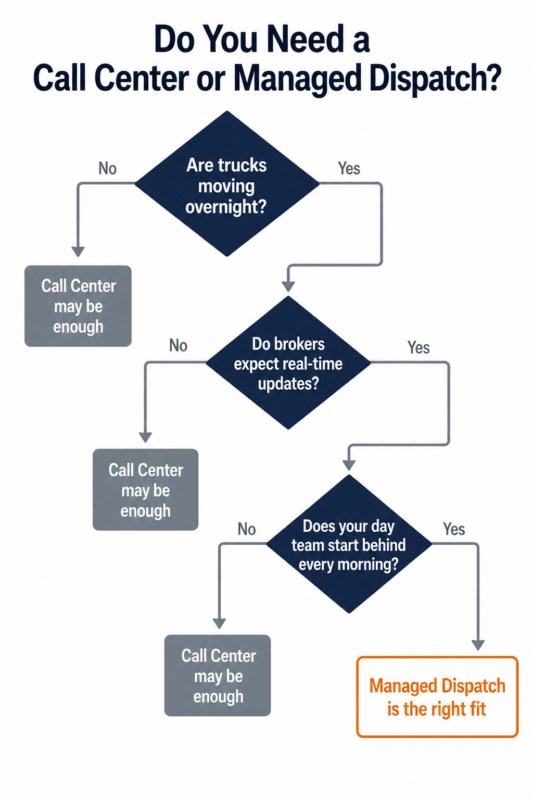
If trucks are rarely moving overnight, if brokers do not expect real-time updates, or if the owner only needs someone to capture non-urgent information, a trucking call center may be a reasonable option.
The problem starts when the company expects call center coverage to act like dispatch coverage. And that is where expectations break down.
When Managed Dispatch Is the Better Fit
Managed dispatch is usually the better fit when:
- Loads move overnight
- Drivers need live support
- Brokers expect updates
- The day team starts behind each morning
In those cases, an after-hours dispatch service should not just answer the phone. It should manage the workflow.
Why This Matters More in 2026
Freight operations are becoming less forgiving.
Rates, capacity, driver retention, broker expectations, and operating costs all put pressure on execution. When the market is loose, small gaps may be easier to absorb. When the market tightens, those same gaps become expensive.
After-hours coverage is no longer just a convenience. For many trucking companies, it is part of operational stability.
If freight is moving overnight, someone needs to own it.
Work with Ninja Dispatch to Take Control of Your Night Dispatch
The wrong question is, “Do we need a call center?” The better question is, “Who owns our operation when our daytime team is offline?”
A trucking call center may answer the phone. Managed dispatch helps keep the freight moving.
Ninja Dispatch provides managed night dispatch and after-hours dispatch coverage for trucking companies, freight brokers, and logistics providers. Headquartered in Cleveland, with operations in Bucharest and global dispatch coverage, Ninja Dispatch has served 100+ fleets since 2018. The company was also voted the number-one dispatching company by FreightWaves, and its dispatchers are trained on systems such as McLeod, Samsara, and Motive.
Book a discovery call to see how Ninja Dispatch can build managed after-hours coverage around your fleet’s workflows, SOPs, and overnight expectations.
Frequently Asked Questions About Ninja Dispatch
What is the difference between managed night dispatch and a call center?
Managed night dispatch manages freight workflows overnight, including driver communication, broker updates, TMS activity, and exception handling. A call center usually answers calls, follows scripts, creates tickets, and escalates issues.
Is managed dispatch better than a trucking call center?
Managed dispatch is usually better for fleets that need operational support, not just message-taking. A call center may work for basic coverage, but managed dispatch is better when loads, drivers, and broker updates need active overnight attention.
What should trucking companies look for in an after-hours dispatch service?
Trucking companies should look for TMS access, custom SOPs, dedicated dispatch coverage, visibility dashboards, clear escalation paths, and accountability for overnight communication.
Can managed dispatch replace an in-house night team?
Yes. Managed dispatch can replace or supplement an in-house night team when the provider is trained on the fleet’s workflows, systems, and communication standards.
How does Ninja Dispatch support overnight trucking operations?
Ninja Dispatch provides managed night dispatch and after-hours coverage for trucking companies, brokers, and logistics providers. Headquartered in Cleveland, with operations in Bucharest and globally, Ninja Dispatch has served 100+ fleets since 2018.